
In this story
Some places look beautiful in photographs. Neelum Valley makes photographs look like they are not trying hard enough.
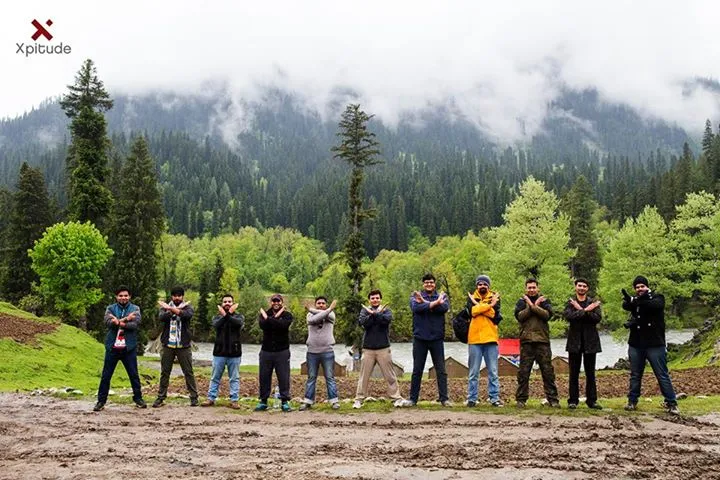
Imagine a turquoise river, forested mountains, wooden houses balanced on hillsides and a roadside café pouring pink Kashmiri chai. Now imagine not checking your email for a week.
A River with Two Names
Before 1947 the river and valley were called Kishanganga, a name still used across the Line of Control. Today it is the Neelum, often linked to the sapphire color of its water. The valley winds northeast from Muzaffarabad for well over a hundred kilometers, growing wilder with every bend.
At Keran, the river becomes a border, and you can see villages on the other side just a stone's throw away. It is a quietly moving place.
Sharda: Where Scholars Once Walked
Sharda is home to the ruins of Sharda Peeth, once one of South Asia's great centers of learning. It is believed to have drawn scholars from across the region more than a thousand years ago, and the old Sharada script, once used to write Kashmiri and Sanskrit, shares its name.
Today the ruins stand quietly above the river. It is the kind of place that invites you to slow down and think about how much knowledge has passed through these mountains.
Kel and Arang Kel: The Hilltop Village
From Kel, a cable car (when operating) or a steep hike leads up to Arang Kel, a hilltop village of wooden homes and green meadows that looks like an illustration from a children's book. The climb is short but steep. Your legs may file a complaint. Your eyes will overrule them.
Further up, the valley continues to Taobat, near the end of the road, where the language even changes. The valley is also home to Kundal Shahi, an endangered language spoken nowhere else.
Kashmiri Hospitality
Neelum's people have rebuilt much of their lives after the 2005 earthquake, and their warmth is legendary. Noon chai, salted and pink, is offered generously, and many guesthouses are family run. A simple conversation over tea can become the highlight of the whole trip.
Plan Your Trip
- How to get there: Drive from Islamabad to Muzaffarabad (about 3 to 4 hours), then follow the Neelum road north
- Duration: 5 to 7 days
- Best season: May to October
- Difficulty: Easy to moderate
- Highlights: Keran, Sharda, Kel, Arang Kel and Taobat
- Stay: Hotels, guesthouses and lodges